
By Kevin Snoeier, with years of experience in garden maintenance and botany.
Laurel is a staple in many Dutch gardens. Whether you choose the robust cherry laurel (Prunus laurocerasus) or the aromatic sweet bay (Laurus nobilis), both varieties require careful maintenance to preserve their beauty. Pruning is essential in this regard. This article, based on proven horticultural practices and in-depth expertise, explains why, when and how to prune your laurel for the best results. We also offer practical tips for restoring neglected shrubs and creating neat hedges.
Laurel is well known for its fast and vigorous growth. Cherry laurel in particular can quickly lose its shape, grow too large or develop bare patches without regular pruning.
The main reasons — backed by our experience — to prune laurel are:
Proper timing is crucial to avoid damaging your laurel and to ensure quick recovery. There are two optimal periods in the year for pruning laurel:
According to our expertise, this is the most suitable time for heavy pruning. The risk of frost damage is minimal and the plant is at the start of an active growing period. As a result, the laurel recovers quickly and puts out vigorous, fresh new growth.
An optional but recommended second pruning in summer is ideal for fast-growing laurel varieties. This pruning session helps to keep the shape tight and prevents the plant from becoming too exuberant. Summer pruning is particularly effective for tidying up hedges or precision shaping.
Important warning from our experts: Never prune just before or during frost periods. Freshly pruned laurel is particularly sensitive to cold, which can lead to serious leaf damage or even the death of parts of the plant.
The specific pruning technique varies depending on your goal: maintenance, shaping or drastic cutback. Below we describe the methods our professionals use:
Carry out this pruning once or twice a year to keep the shrub healthy and looking its best.
For creating a neat laurel hedge, precise shape pruning is essential.
Has your laurel been neglected, grown too large or lost its shape? Then rejuvenation pruning is an effective, if drastic, method.
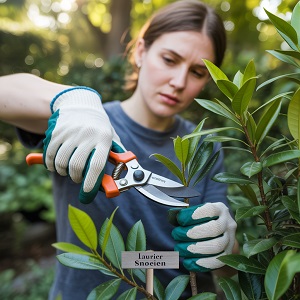
Using the right, clean tools is crucial for a successful pruning session and the health of your laurel.
Our professional tip: Clean your tools after each use thoroughly with alcohol or a diluted bleach solution. This prevents the spread of disease between plants.
To prevent damage to your plant, our experts are happy to point out the most common mistakes:
After the pruning session it is essential to support your laurel's recovery well and to stimulate new growth.
Not every laurel variety responds the same way to pruning. Below is an overview of the most common varieties and our recommendations:
The most common variety for hedges in the Netherlands. This laurel grows quickly and tolerates heavy pruning exceptionally well. Perfect for both shape pruning and drastic maintenance pruning.
Known as the culinary herb. This variety grows more slowly and calls for a gentle pruning approach. It is better to bring sweet bay into shape gradually than to prune it back drastically.
With its finer leaves and slightly slower growth than cherry laurel, Portuguese laurel tolerates pruning well. However, with rejuvenation pruning, recovery requires a little more patience.
At least once a year in spring is essential for the health and shape of your laurel. For hedges or fast-growing varieties, twice a year (spring and summer) is recommended to keep the shape tight.
Yes, especially the cherry laurel (Prunus laurocerasus) recovers exceptionally well from a drastic bare pruning (rejuvenation pruning). The plant will sprout again from its dormant buds. It is important to take extra good care of the plant after such an operation, with water and possibly some fertiliser. Sweet bay tolerates this less well.
It is certainly recommended to lightly fertilise the laurel after pruning, especially after a heavy pruning session. This gives the plant the nutrients it needs to recover quickly and develop new, healthy shoots. Organic fertilisers or compost are excellent choices for this purpose.
Yes, cherry laurel (Prunus laurocerasus) is toxic to both humans and animals (particularly the leaves and berries) due to the cyanogenic glycosides it contains. Be extra careful when pruning and clearing pruning waste, especially around young children and pets. The sweet bay (Laurus nobilis), whose leaves are used as a culinary herb, is however safe.
Brown leaves after pruning can have several causes. It may indicate frost damage if you pruned too late in the year. Also drought after pruning can lead to brown leaves, as the plant then needs extra water for recovery. Finally, pruning in full sun can lead to scorching of the fresh leaves. Ensure adequate watering, prune at the right time and avoid pruning during bright sunshine to prevent this.
With the expertise and practical experience we have shared in this guide, you are fully prepared to keep your laurel healthy, beautiful and in shape. Whether it is a neat hedge or a standalone shrub, the right approach makes all the difference.
Do you have further questions or would you like personal advice about pruning your laurel? Our experts are ready to help you!